




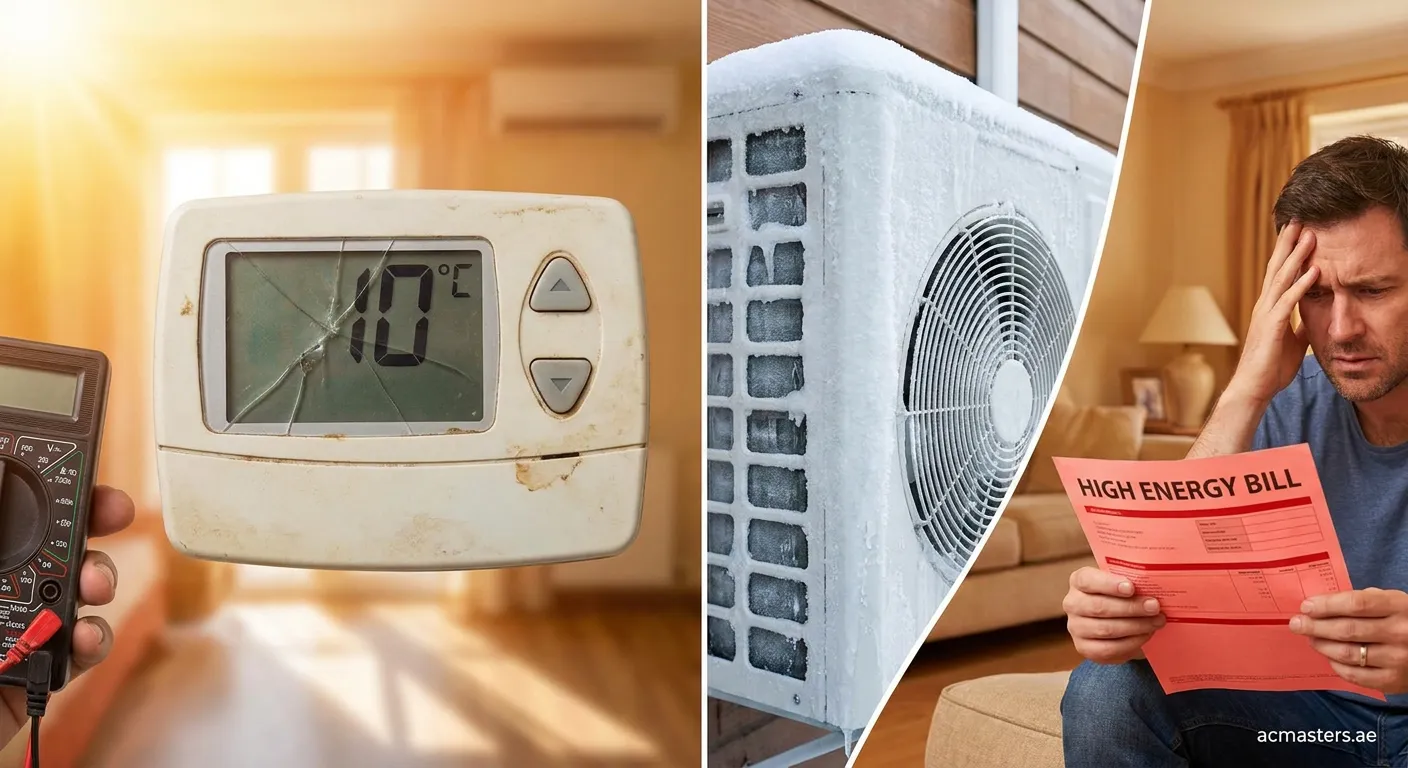
What Are Inaccurate Readings?
Inaccurate readings occur when sensors, thermostats, or monitoring devices fail to display correct data. In HVAC systems, these errors can lead to improper cooling, wasted energy, and premature equipment failure.
Common Causes of Faulty Measurements
Several factors contribute to inaccurate readings in air conditioning systems:
- Sensor degradation – Over time, temperature sensors lose calibration accuracy
- Electrical interference – Power fluctuations disrupt signal transmission
- Physical damage – Dust accumulation, moisture, or impact damage sensor components
- Software glitches – Outdated firmware causes display errors
- Improper installation – Poorly positioned sensors give false data
The Impact of Inaccurate Readings on Your AC System
1. Energy Waste and Higher Bills
When thermostats display incorrect temperatures, your AC runs longer than necessary. A reading just 2-3 degrees off can increase energy consumption by 10-15%. Over months, this translates to significant utility costs.
2. Reduced Comfort Levels
Faulty sensors create uncomfortable indoor environments. You might set your thermostat to 22°C, but inaccurate readings mean the actual temperature could be 25°C or higher.
"Accurate readings are the foundation of efficient climate control. Without them, systems operate blind." – HVAC Industry Standard
3. Equipment Strain and Shortened Lifespan
The impact of inaccurate readings extends to your equipment. When sensors provide wrong data:
- Compressors cycle too frequently
- Fans operate at incorrect speeds
- Refrigerant pressure readings mislead technicians
- System components wear out faster
4. Missed Maintenance Warning Signs
Modern AC systems use readings to detect problems early. Inaccurate readings mask:
- Refrigerant leaks
- Compressor issues
- Airflow restrictions
- Electrical faults
Industries Most Affected by Inaccurate Readings
Commercial Buildings
Office complexes rely on precise climate control. Inaccurate readings in these settings affect:
- Employee productivity
- Server room temperatures
- Customer comfort in retail spaces
- Building management systems
Healthcare Facilities
Hospitals require exact temperature and humidity levels. Faulty readings can compromise:
- Patient comfort and recovery
- Medication storage conditions
- Operating room environments
- Laboratory equipment accuracy
Data Centers
Server rooms demand precise cooling. Even small reading errors risk equipment overheating, data loss, and costly downtime.
How to Detect Inaccurate Readings
Warning Signs to Watch For
- Temperature fluctuations despite stable thermostat settings
- Unusual energy bill spikes
- AC running constantly or short-cycling
- Hot and cold spots throughout your space
- Error codes on digital displays
Professional Calibration
The impact of inaccurate readings is best prevented through regular professional calibration. Certified technicians use calibrated reference instruments to verify sensor accuracy and make necessary adjustments.
Preventing Inaccurate Readings
- Schedule regular maintenance – Professional inspections catch sensor issues early
- Clean sensors regularly – Dust and debris affect accuracy
- Update firmware – Keep software current for digital systems
- Monitor energy bills – Sudden increases may indicate reading errors
- Install quality equipment – Higher-grade sensors maintain accuracy longer