




Is your air conditioner blowing warm air or failing to maintain the set temperature? The culprit could be a small but vital component: the solenoid valve. Learning how to troubleshoot a bad AC electromagnetic valve can save you time and money on unnecessary repairs. This component controls the flow of refrigerant, and when it fails, your system's efficiency plummets.
Understanding the Role of the Electromagnetic Valve
The electromagnetic valve, often called a solenoid valve, is an electromechanically operated valve. It is responsible for reversing the flow of refrigerant in heat pumps or shutting off liquid lines. When the coil is energized, it creates a magnetic field that lifts a plunger, opening the valve.
Common Symptoms of a Faulty Valve
Before you grab your tools, identify the signs. Knowing the symptoms makes the process of how to troubleshoot a bad AC electromagnetic valve much easier.
- System fails to cool or heat: The valve may be stuck in the wrong position.
- Compressor runs continuously: If the valve doesn't close, the system may never reach the target temperature.
- Strange noises: A humming or clicking sound without the valve engaging indicates coil failure.
- Ice formation: A stuck valve can cause improper pressure, leading to freezing on the evaporator coils.
Tools Required for Troubleshooting
To properly diagnose the issue, you will need:
- Multimeter
- Screwdriver set
- Magnetic solenoid tool (optional)
- Safety gloves
Step-by-Step Troubleshooting Guide
Follow these steps to determine if your valve needs replacement.
1. Visual Inspection
Turn off the power to the AC unit completely. Locate the solenoid valve on the refrigerant line. Inspect the coil for cracks, melted plastic, or corrosion. Check the wiring for frayed edges or loose connections. Physical damage is often the first clue in how to troubleshoot a bad AC electromagnetic valve.
2. Check for Magnetism
Restore power to the unit and turn the thermostat to a setting that calls for cooling. Hold a screwdriver tip near the top of the solenoid coil.
- If you feel a magnetic pull: The coil is receiving power and creating a magnetic field. The issue might be mechanical (the internal plunger is stuck).
- If there is no pull: The coil is not energized. This suggests an electrical fault in the coil or the control board.
3. Electrical Continuity Test
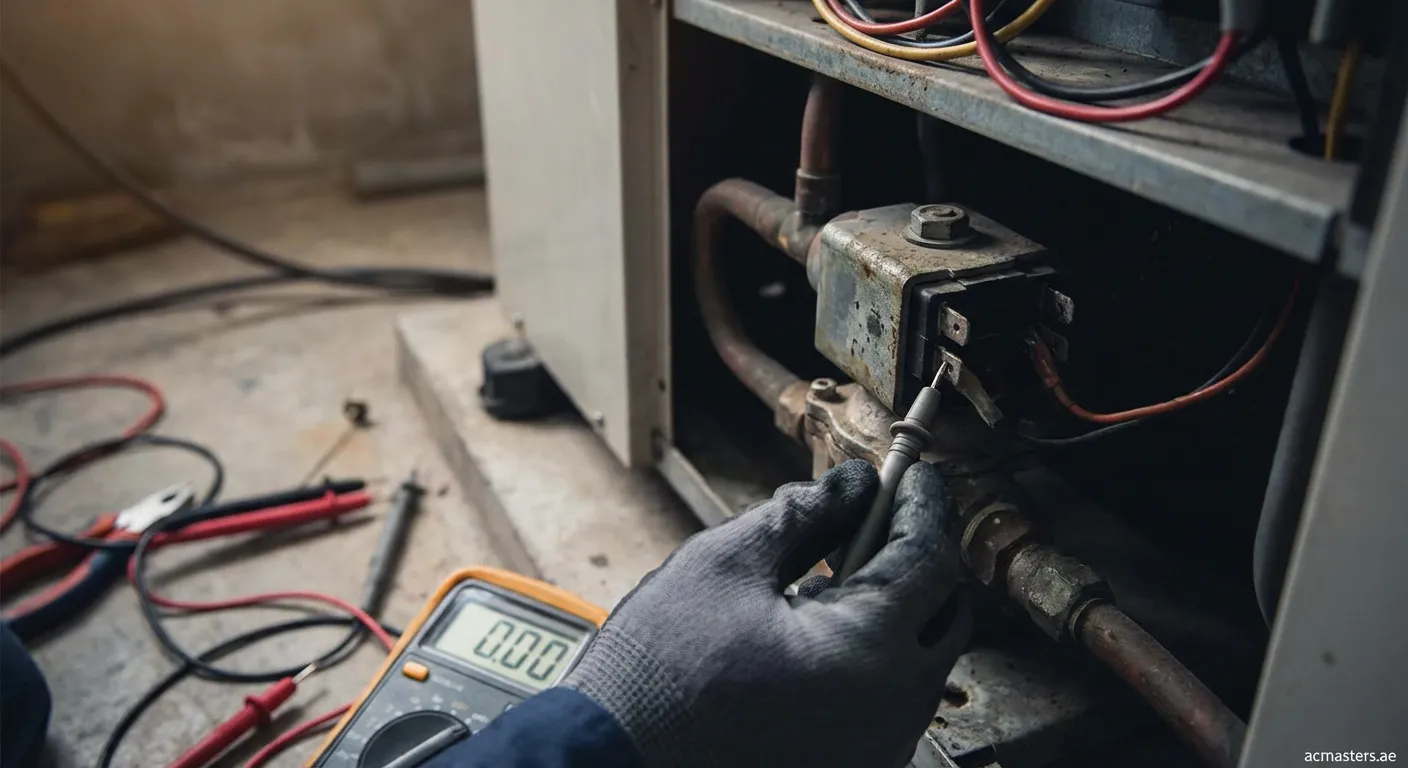
This is the most definitive test. Turn off the power again and disconnect the wires leading to the solenoid valve.
- Set your multimeter to the Ohms (resistance) setting.
- Place the probes on the valve's wire terminals.
- Reading Analysis:
- Zero or near zero: The coil is shorted.
- Infinite (OL): The coil is open (broken wire inside).
- Specific resistance (check manufacturer specs): The coil is likely good.
4. Mechanical Operation Check
If the electrical side checks out, the valve body might be physically jammed due to debris or sludge in the refrigerant. While you cannot easily see inside without removing it, a valve that clicks but does not change the system pressures usually indicates a mechanical seizure.
Note: working with high-voltage HVAC electricity and pressurized refrigerant is dangerous. If you are uncomfortable with these steps, seek professional help immediately.
Replacing the Valve
If you have successfully determined how to troubleshoot a bad AC electromagnetic valve and found it defective, replacement is the next step. If only the coil is bad, it can often be swapped without opening the refrigerant lines. However, if the valve body is stuck, the system must be pumped down, and the valve brazed out and replaced.