




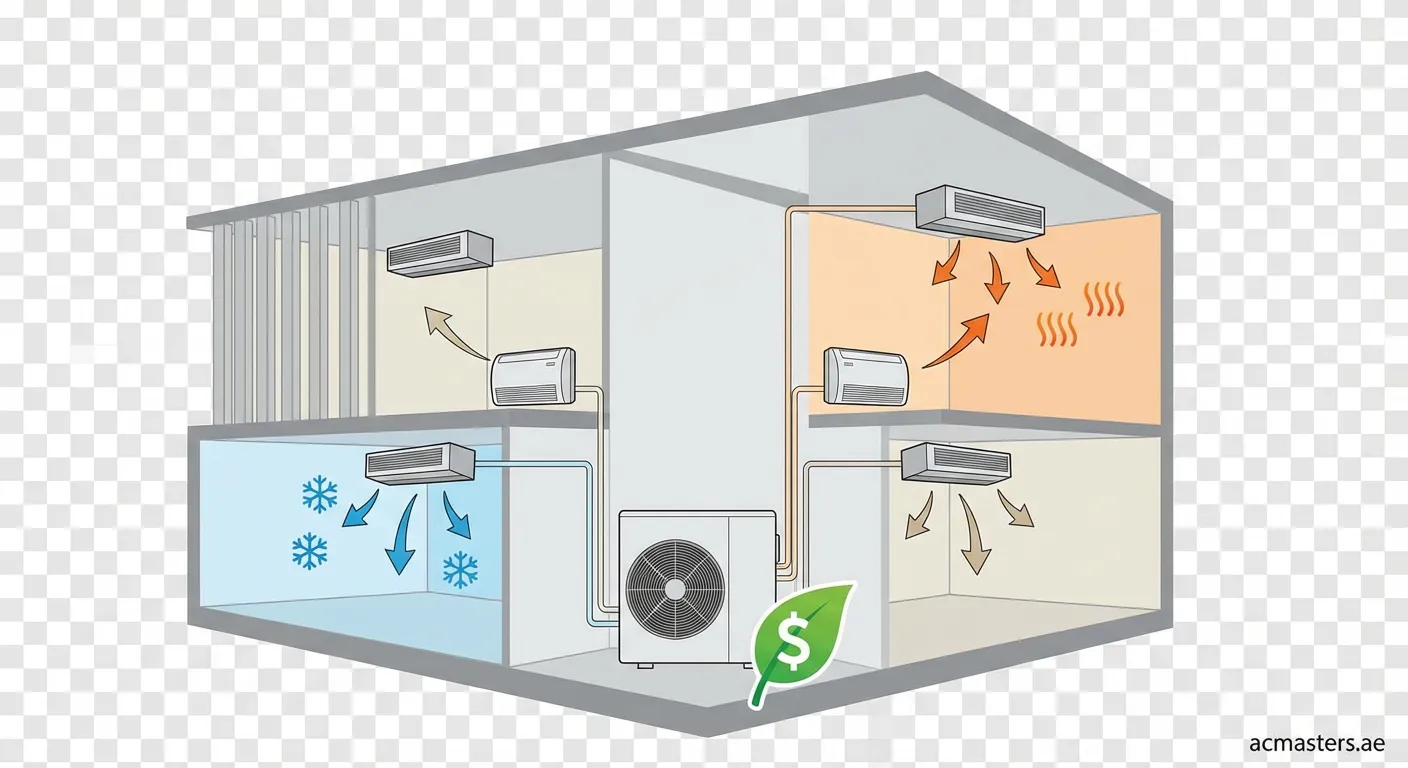
The benefits of variable refrigerant flow (VRF) systems make them one of the most advanced HVAC solutions available today for commercial and residential applications.
Superior Energy Efficiency
Precise Temperature Control
Variable refrigerant flow technology operates by adjusting the amount of refrigerant flowing to each indoor unit based on real-time demand. Unlike traditional systems that cycle on and off at full capacity, VRF systems run continuously at varying speeds.
This precise modulation results in:
- Up to 30% energy savings compared to conventional HVAC systems
- Reduced wear on system components
- Lower monthly utility bills
- Minimal temperature fluctuations
Simultaneous Heating and Cooling
One of the key advantages of VRF systems is their ability to heat and cool different zones simultaneously. This is achieved through heat recovery technology:
"A single VRF system can extract heat from one zone requiring cooling and transfer it to another zone requiring heating, dramatically improving overall efficiency."
This feature proves particularly valuable in buildings with diverse thermal zones or during seasonal transitions when some areas need heating while others require cooling.
Design Flexibility Benefits
Compact Footprint
VRF outdoor units have a significantly smaller footprint than traditional chiller plants or rooftop units:
- Reduced mechanical room space requirements
- Architectural design freedom
- Easier retrofits in existing buildings
- Multiple mounting options including ground-level installation
Extensive Zoning Capabilities
Benefits of VRF installations include connecting multiple indoor units—often up to 50 or more—to a single outdoor unit. Each zone maintains independent temperature control:
- Individual thermostats per zone
- Customized scheduling options
- Varied capacity settings per area
- Occupancy-based control integration
This level of customization ensures comfort for all building occupants while preventing energy waste in unoccupied or low-use areas.
Cost-Saving Advantages Over Time
Reduced Installation Costs
Although equipment costs may be higher initially, VRF systems offer significant savings during installation:
- Smaller pipe diameters reduce material costs
- Fewer required penetrations through the building envelope
- Simplified electrical requirements due to lower connected loads
- Shorter installation timelines
Lower Operating Expenses
Long-term benefits of variable refrigerant flow systems include substantially reduced operating costs:
| Expense Category | Traditional HVAC | VRF System |
|---|---|---|
| Annual Maintenance | $5-8/sq ft | $2-4/sq ft |
| Energy Costs | Baseline | 20-40% less |
| Equipment Lifespan | 15-20 years | 20-25 years |
| Repair Frequency | Higher | Lower |
Enhanced Comfort Features
Beyond efficiency gains, VRF system benefits extend to occupant comfort: