




Understanding Emergency Cooling Strategies
How to cool a room without an AC (emergency tips) starts with understanding basic thermodynamics. Heat always moves from warmer to cooler areas. Your goal is to accelerate this natural process while preventing additional heat from entering your space.
The Science Behind Natural Cooling
Hot air rises while cool air sinks. This principle forms the foundation of every effective cooling strategy. By manipulating air movement, you can significantly lower your room's temperature without mechanical assistance.
Immediate Actions: Quick Emergency Solutions
Create Cross-Ventilation
Open windows on opposite sides of your room to create a cross-breeze effect. This technique allows fresh air to flow through your space, pushing out stagnant hot air. For maximum effectiveness:
- Open windows fully during cooler morning and evening hours
- Position fans near windows to accelerate air exchange
- Close windows before outdoor temperatures rise
The Wet Sheet Method
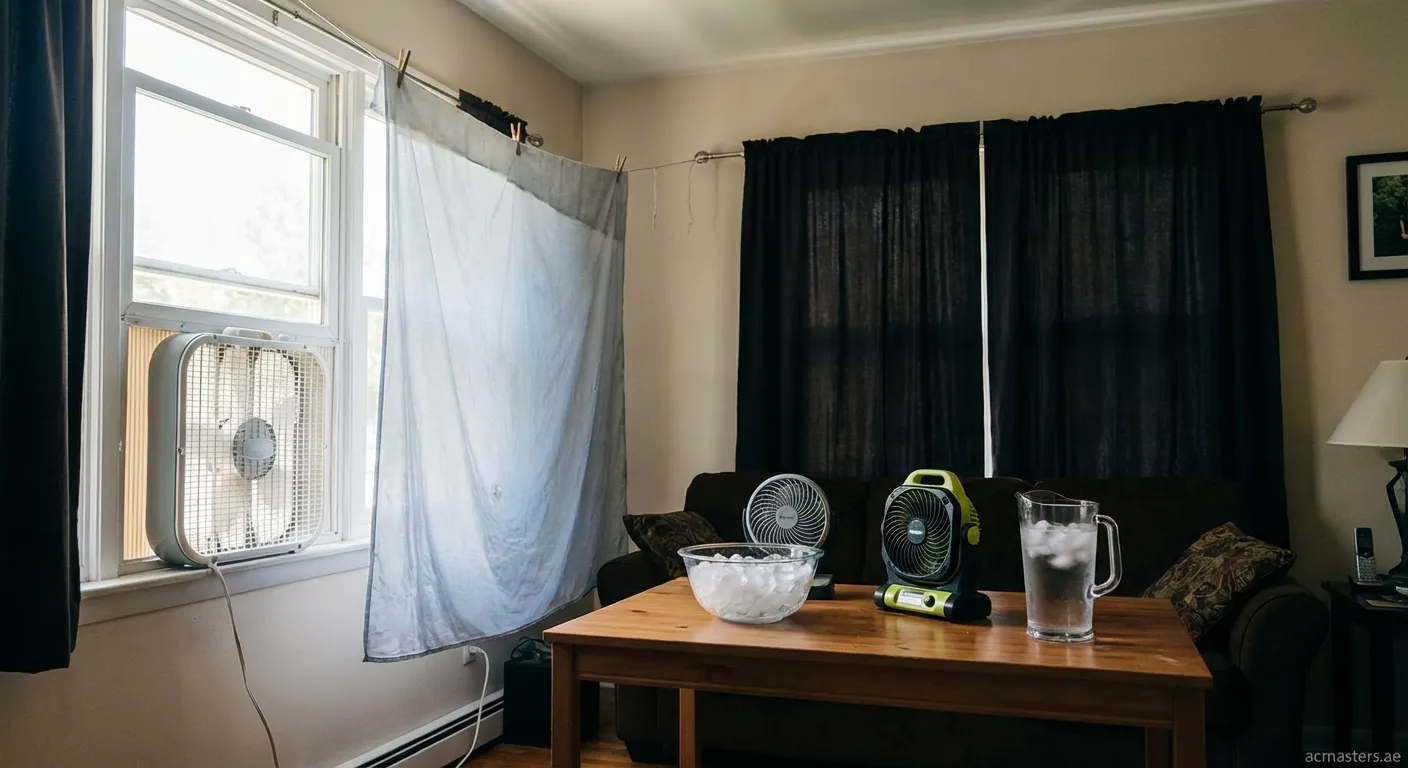
Hang damp sheets or towels near open windows. As air passes through wet fabric, evaporation cools the incoming air significantly. This age-old technique can lower temperatures by 5-10°F in dry climates.
Pro tip: For emergency cooling without an AC, combine wet sheets with strategically placed fans for enhanced evaporative cooling effect.
Strategic Fan Placement Techniques
Position Fans for Maximum Airflow
Fans don't cool air, but they cool people through wind chill effect. Proper fan placement dramatically improves comfort:
- Exhaust fans: Place in windows facing outward to push hot air outside
- Intake fans: Position to draw cooler air from shaded areas
- Ceiling fans: Set rotation counter-clockwise for summer cooling
- Box fans: Angle toward your body for direct cooling relief
Create a DIY Air Conditioner
Place a bowl of ice or frozen water bottles in front of a fan. The fan blows air over the ice, creating a stream of cool air. This simple emergency cooling technique provides immediate relief in small spaces.
Block Heat at Its Source
Window Treatments for Heat Reduction
Solar heat gain through windows accounts for up to 30% of indoor heat. Block this heat effectively:
- Close blinds and curtains during peak sun hours
- Use reflective materials on sun-facing windows
- Install blackout curtains for maximum heat rejection
- Apply window film to reduce solar penetration
Minimize Internal Heat Sources
Electronic devices and appliances generate significant heat. During emergency cooling situations:
- Turn off unnecessary electronics
- Use LED bulbs instead of incandescent lights
- Avoid using ovens and stoves
- Unplug devices when not in use
Advanced Cooling Techniques
Nighttime Cooling Strategy
Take advantage of cooler nighttime temperatures:
- Open all windows before bed
- Use fans to flush out hot air
- Close everything early morning
- Seal any air gaps around windows and doors
The Ice Bottle Method
Freeze plastic water bottles and place them around your room. As ice melts, it absorbs heat from surrounding air. Refreeze bottles daily for continuous emergency cooling without electricity costs.
Optimizing Room Layout for Better Airflow
Remove Obstacles to Air Circulation
Furniture and clutter restrict air movement. Rearrange your space to create clear pathways for air to flow freely between windows and through the room.
Focus on Your Body Temperature
When learning how to cool a room without an AC (emergency tips), remember that personal cooling matters too:
- Stay hydrated throughout the day
- Wear loose, light-colored clothing
- Use cooling towels on your neck and wrists
- Take cool showers to lower body temperature