




Understanding AC Refrigerants
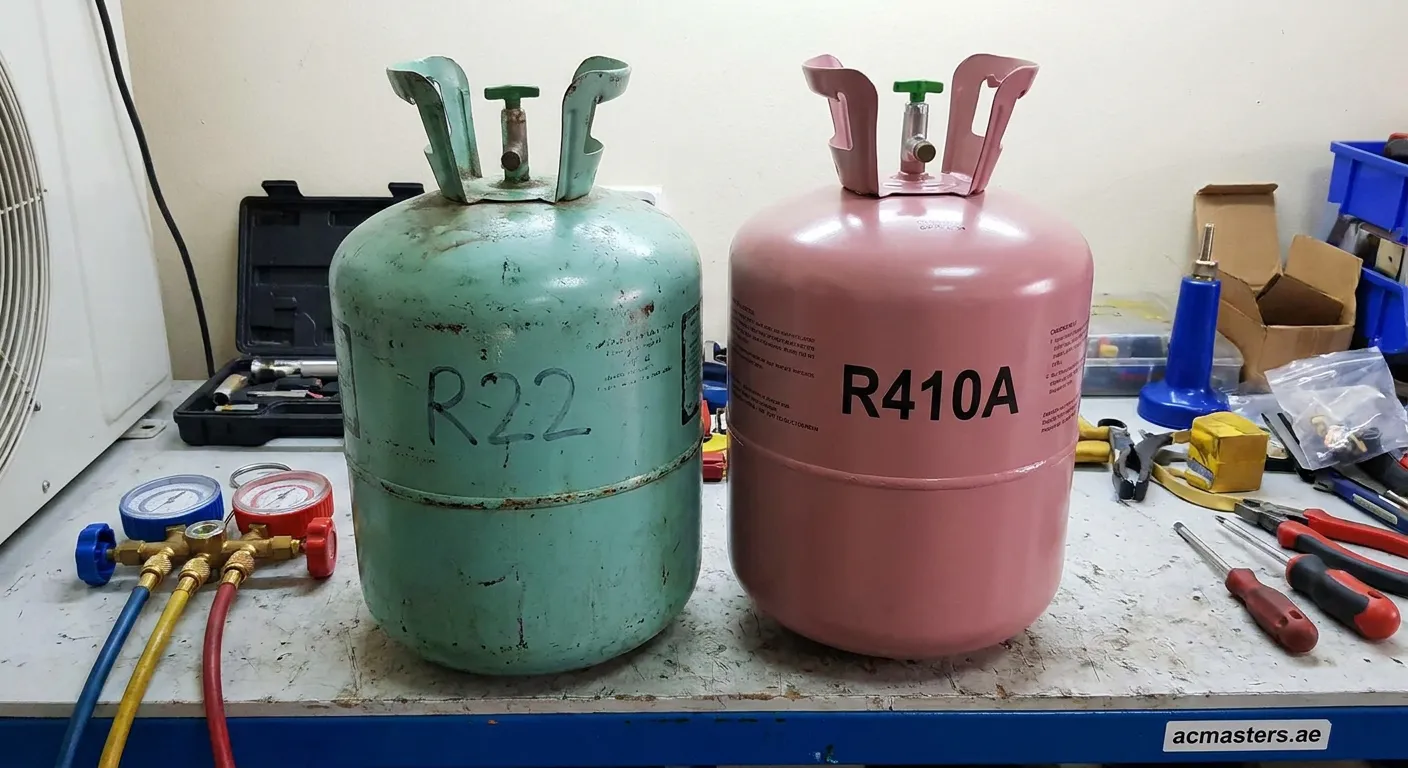
Refrigerants are the working fluids inside air conditioning units responsible for transferring heat from indoor air to the outside. For decades, R-22 (commonly known by the brand name Freon) served as the standard cooling agent across residential and commercial cooling units. However, international environmental policies and evolving technology led to the widespread adoption of newer alternatives like R-410A (often called Puron). To make smart equipment choices, homeowners must recognize the difference between R22 and R410A refrigerant and how each impacts operating costs, cooling performance, and equipment lifespan.
Key Differences Between R22 and R410A
When analyzing these two cooling compounds, several mechanical, economic, and chemical factors highlight the difference between R22 and R410A refrigerant.
1. Environmental Impact and Regulations
The primary driving force behind the HVAC transition is environmental safety. R-22 is a hydrochlorofluorocarbon (HCFC) that contains chlorine, which damages the ozone layer when released into the atmosphere. Under the Montreal Protocol, the production and importation of R-22 were phased out completely. In contrast, R-410A is a hydrofluorocarbon (HFC) blend that does not contain chlorine and has zero ozone depletion potential (ODP), making it an eco-friendly option.
2. Operating Pressure and Energy Efficiency
R-410A operates at substantially higher pressures than R-22—typically 50% to 60% higher. Because of this engineering divergence:
- R410A systems use heavy-duty components and thicker copper tubing capable of handling elevated working pressure.
- R410A has higher thermal conductivity, enabling the refrigerant to absorb and release heat more effectively.
- Systems running on R410A generally achieve higher Seasonal Energy Efficiency Ratio (SEER) ratings, reducing power consumption.
3. Lubricant Compatibility
Compressors require specialized lubricants to minimize friction and prevent mechanical breakdown:
- R-22 systems utilize standard mineral oil.
- R-410A systems require synthetic polyolester (POE) oil, which dissolves properly with HFC molecules.
- Mixing these lubricants or putting R410A into an R22 circuit causes chemical breakdown and instant compressor failure.
Can You Charge an R22 Unit with R410A?
Homeowners often wonder if they can recharge an older R-22 air conditioner with modern R-410A coolant. The clear answer is no. Because of the difference between R22 and R410A refrigerant pressures and oils, retrofitting is neither safe nor practical. Older evaporator and condenser coils cannot withstand R410A pressures and will burst.
Cost Comparison and Availability
Since R-22 is no longer produced, technicians must rely on dwindling stockpiles of reclaimed coolant, driving repair prices to extreme highs. Conversely, R-410A is readily available, affordable, and standard in modern systems.
Pro Tip: If your AC was manufactured before 2010 and develops an R-22 leak, upgrading to a modern cooling system is far more economical than paying for costly freon top-ups.