




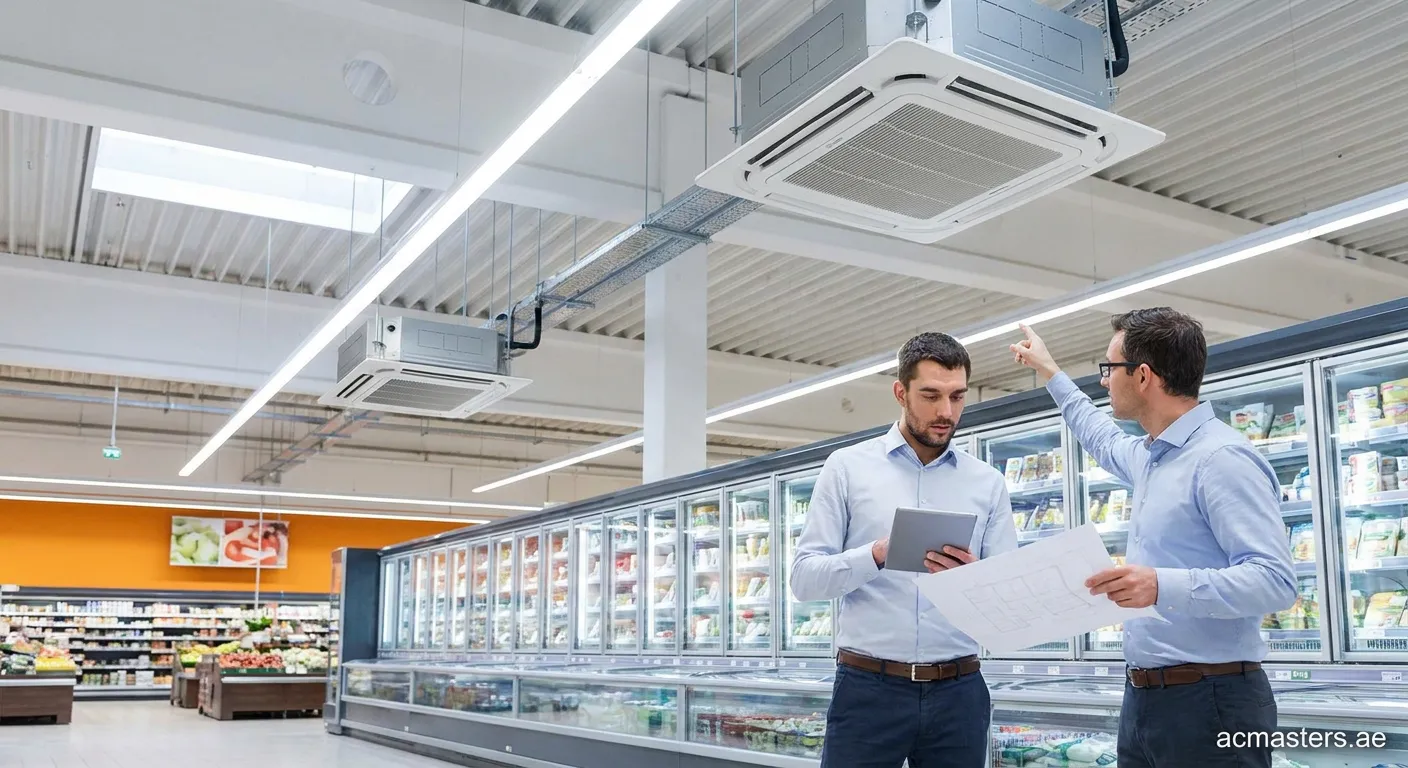
Key Factors in Supermarket Climate Control
Supermarket cooling is distinct from standard retail environments. Understanding how to choose the best AC for a supermarket requires balancing ambient guest comfort with refrigerated display cases.
1. Account for Refrigeration Case Interaction
Open refrigerated display cases spill cold air into aisles, creating unique microclimates:
- Cold Aisle Effect: Air near frozen food cases is significantly cooler, requiring strategic thermostat placement.
- Latent vs. Sensible Heat: Refrigeration units handle some sensible cooling, but the primary AC must manage moisture removal.
- Airflow Distribution: Diffusers must be positioned to avoid blowing air directly into open display cases, which forces compressors to work harder.
Essential Criteria for Selecting Supermarket HVAC
When evaluating how to choose the best AC for a supermarket, consider these technical parameters:
Accurate Sizing and Thermal Load Calculations
Never size a grocery store HVAC system purely by floor area. A comprehensive load calculation evaluates:
- Peak foot traffic during busy evening and weekend hours.
- Heat gain from baking ovens, rotisseries, and deli equipment.
- Lighting systems and expansive front-window solar gain.
- Thermal transfer through exterior roof and wall insulation.
Advanced Humidity Control
Excess indoor moisture creates fogged display glass, slippery aisles, and frost buildup on freezer coils. Select units featuring dedicated hot gas reheat or integrated desiccant dehumidifiers.
Maintaining relative humidity between 40% and 50% minimizes refrigeration defrost cycles and significantly reduces storewide electric bills.
Energy Efficiency Ratings (IEER and COP)
Grocery stores operate 12 to 24 hours daily, making operational efficiency critical:
- Integrated Energy Efficiency Ratio (IEER): Evaluates seasonal cooling performance under part-load conditions.
- Variable Speed Compressors: Adjust cooling output dynamically to match store occupancy without costly start-stop cycles.
- Economizer Dampers: Pull in cool outside air during mild weather to provide free cooling.
Common Commercial AC Systems for Grocery Stores
Understanding the primary system types helps clarify how to choose the best AC for a supermarket:
- Packaged Rooftop Units (RTUs): The standard choice for single-story supermarkets. They keep heavy equipment, maintenance noise, and vibration outside the customer retail zone.
- Variable Refrigerant Flow (VRF) Systems: Provide precise zone temperature control, ideal for balancing distinct areas like warm checkout lanes and cool dairy aisles.
- Dedicated Outdoor Air Systems (DOAS): Supply conditioned fresh air to satisfy ventilation codes while managing heavy latent humidity loads.
Smart Integration with Building Automation
Ensure your chosen AC system integrates with centralized building management systems (BMS). Automated scheduling, automated filter alerts, and real-time power monitoring protect your investment.