




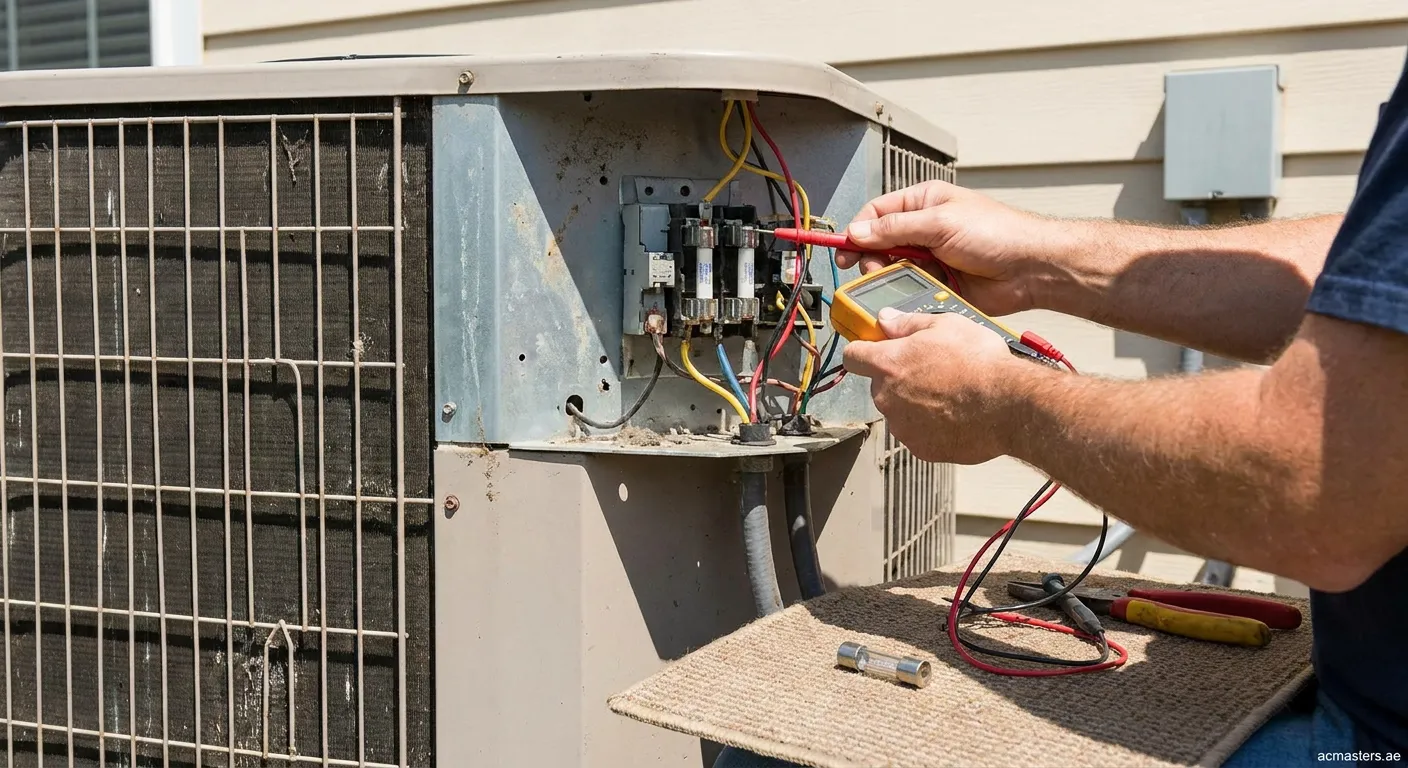
Signs That Point to a Blown AC Fuse
When an air conditioning unit suddenly stops running during hot weather, an electrical safety cutoff is often the prime culprit. Understanding how to troubleshoot a bad AC fuse allows homeowners to distinguish between minor electrical faults and serious mechanical failures. Fuses are designed to protect delicate electronics from voltage spikes and overcurrent conditions. Common symptoms of a blown air conditioner fuse include:
- The outdoor condensing unit does not turn on at all.
- The indoor thermostat has power, but cold air is not flowing.
- You hear a clicking sound near the disconnect box without compressor activation.
- The main circuit breaker remains on, but the condensing unit is completely unresponsive.
Safety Precautions Before Testing
Before attempting to inspect any electrical components, your safety must come first. High-voltage electricity powers your central air system, which can cause severe injury if mishandled.
Always turn off the electrical supply at both the main breaker panel and the outdoor disconnect box before touching internal wiring or fuses. Ensure your hands and tools are dry, use insulated tools, and verify that the power is completely dead before opening the disconnect switch enclosure.
Step-by-Step: How to Troubleshoot a Bad AC Fuse
To accurately determine whether your system's fuse has blown, follow this methodical testing procedure:
1. Locate the Disconnect Box
Find the metal disconnect box mounted on the exterior wall near your outdoor condenser. Open the weatherproof cover to reveal the pull-out block or cartridge fuse holders.
2. Disconnect All Power
Pull out the disconnect plug handle or flip the service switch to the OFF position. This isolates the outdoor unit from power.
3. Inspect the Fuses Visually
Remove the cartridge fuses carefully. Some glass fuses will show obvious black burn marks or a broken internal wire. However, many ceramic or high-capacity cartridge fuses conceal internal damage, requiring instrument testing.
4. Test with a Digital Multimeter
A multimeter is the most reliable tool when learning how to troubleshoot a bad AC fuse:
- Set your multimeter to the lowest Ohms (resistance) setting or continuity mode.
- Place one test probe on one metal end cap of the fuse and the second probe on the opposite end cap.
- Continuity test: A continuous beep or a reading close to zero ohms indicates the fuse is intact and working properly.
- Blown fuse result: An infinite reading (OL or Open Line) or no beep confirms the fuse is blown and must be replaced.
Common Reasons AC Fuses Blow Repeatedly
If you replace a fuse and it blows immediately again, do not install a higher-amp fuse, as this creates a dangerous fire hazard. Frequent fuse failures generally indicate underlying system distress:
- Dirty Condenser Coils: Dust buildup forces the compressor to work harder, drawing excessive current.
- Failing Capacitor: A weak run capacitor strains the compressor motor upon startup.
- Low Refrigerant Levels: Leaks cause the unit to overheat and trigger thermal overcurrent protection.
- Short Circuits: Damaged wiring can cause sudden voltage surges that pop safety fuses.