




Understanding Solar Heat Gain through Glass
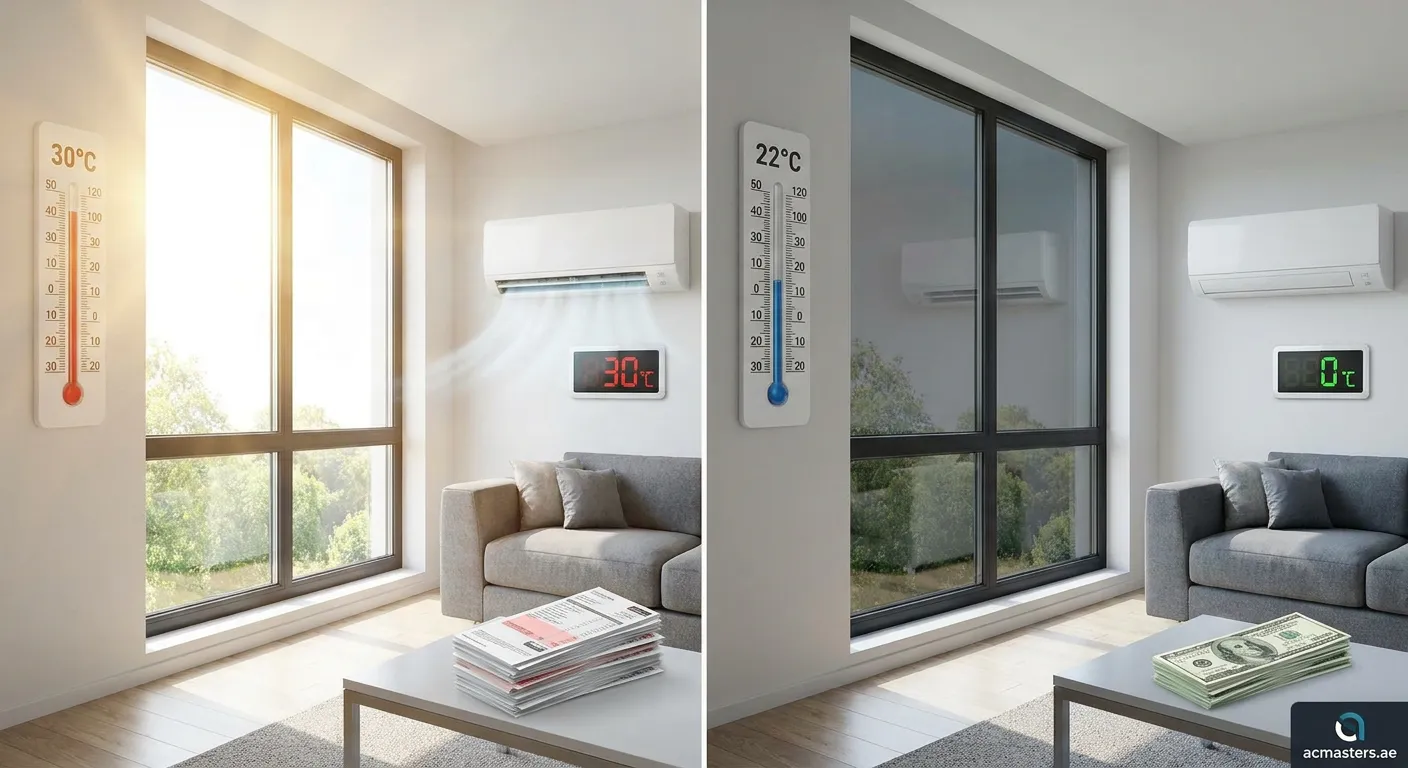
In warm climates, standard single or double-pane windows represent one of the weakest thermal barriers in any residential or commercial building. Up to 76% of sunlight entering through standard windows turns into radiant heat, forcing your cooling equipment to operate constantly. Evaluating the impact of window tinting on AC efficiency begins with understanding this thermodynamic reality: solar radiation continuously transfers thermal energy indoors, elevating room temperatures and triggering relentless thermostat cycles.
Solar heat gain coefficient (SHGC) measures how much solar radiation enters through glass. Quality tint films can drop SHGC ratings by more than 50%, immediately neutralizing heat spikes.
How Window Films Reduce Air Conditioning Load
When solar control films are applied to glass panes, they reflect and absorb substantial amounts of infrared and ultraviolet wavelengths before heat crosses the threshold.
Direct Benefits for Energy Consumption
- Reduced Compressor Cycling: Because internal ambient temperatures remain stable, compressors experience fewer on-off cycles, preserving electrical efficiency.
- Lower Peak Energy Costs: During peak afternoon hours when utility rates peak, tinted glass keeps the indoor thermal load manageable.
- Balanced Zonal Temperatures: Rooms with expansive south- or west-facing windows often suffer hot spots; window film equalizes thermal distribution across the entire floor plan.
By limiting thermal transfer, the impact of window tinting on AC efficiency translates directly to lower monthly power bills, often generating a 10% to 25% reduction in cooling-related electricity usage.
Key Factors in Evaluating Tint Performance
Not all window films offer identical thermal properties. When analyzing the impact of window tinting on AC efficiency, homeowners should look at specific metric ratings:
- Total Solar Energy Rejected (TSER): The percentage of total solar energy deflected by the glass and film combination. Higher percentages mean cooler rooms.
- Visible Light Transmittance (VLT): The amount of natural light allowed through. Modern ceramic tints provide high TSER while keeping VLT bright and natural.
- UV Rejection Rate: High-grade films block up to 99% of harmful ultraviolet rays, safeguarding furniture and reducing secondary heat re-radiation.
Types of Solar Control Window Films
- Ceramic Window Films: Utilize nano-ceramic particles to reject infrared heat without dark tinting or interfering with electronic signals.
- Reflective & Dual-Reflective Films: Offer mirror-like exteriors to bounce solar rays away, delivering exceptional thermal defense for intense sun exposure.
- Spectrally Selective Films: Target infrared rays specifically while allowing maximum visible light to illuminate the space.
Protecting HVAC Components and Longevity
Beyond utility bills, decreasing the thermal workload protects your cooling infrastructure. Heavy heat loads cause compressors and fan motors to run under high stress, precipitating coil freeze-ups, capacitor failures, and refrigerant overheating. Installing quality window treatments acts as a passive cooling shield, easing continuous strain and extending the overall operational life of your air conditioning equipment.