




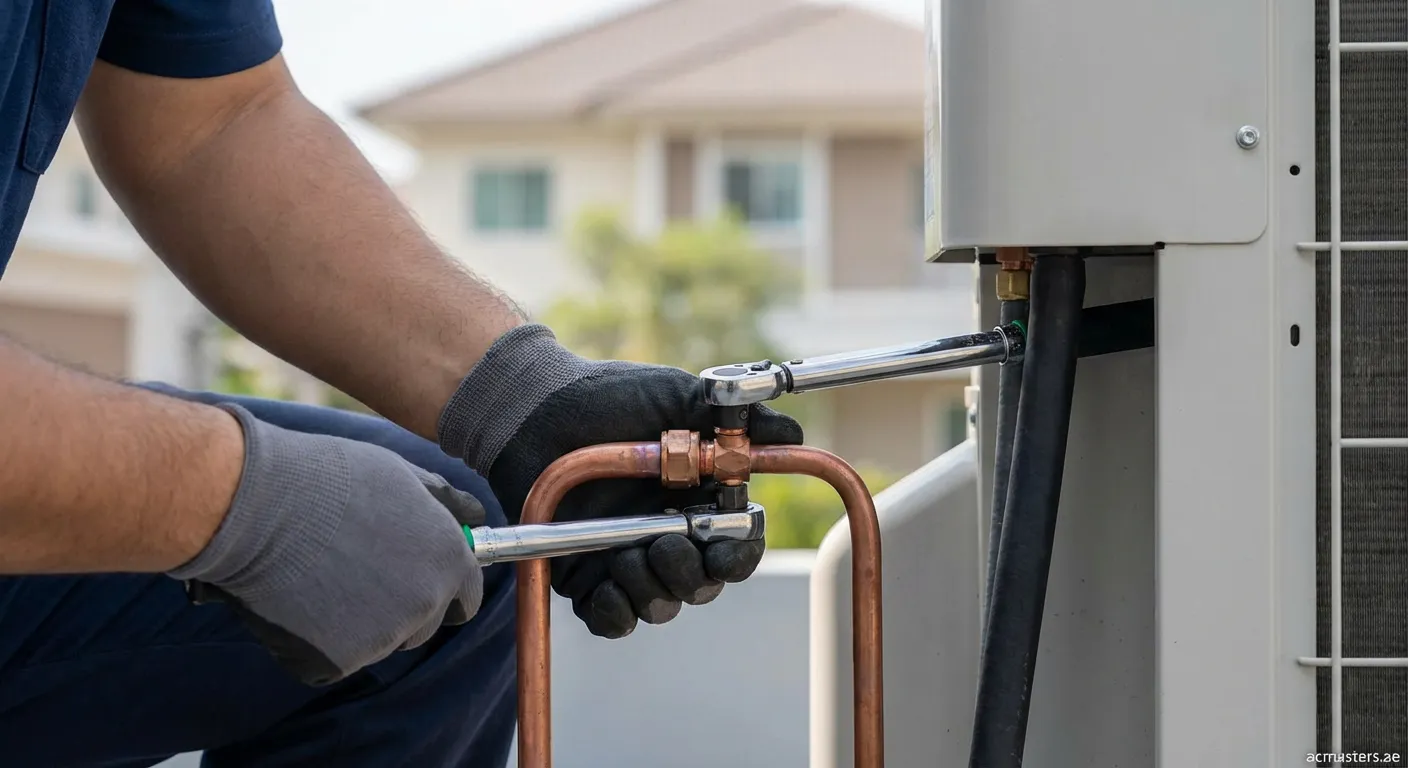
When troubleshooting an air conditioning system, technicians often look for big problems like compressor failure or motor burnout. However, one of the most critical aspects of HVAC health lies in the copper pipe terminations. Understanding The importance of checking the flare connections is vital for anyone who wants a durable and efficient cooling system. A flare connection is a type of compression fitting used with metal tubing, typically soft copper, to secure the flow of refrigerant between the indoor and outdoor units.
Why Flare Connections Fail
Flare connections rely on a precise metal-to-metal seal. Over time, these joints can become the weakest link in your AC system due to:
- Vibration: The outdoor unit creates constant vibration, which can loosen the nuts over time.
- Thermal Expansion: Cycles of heating and cooling cause the copper to expand and contract, potentially compromising the seal.
- Poor Installation: If the flare face is cracked or the nut is over-tightened, a leak is inevitable.
The Consequences of Neglect
Ignoring these small components leads to significant issues. The importance of checking the flare connections becomes evident when you consider the impact of refrigerant leaks.
- Loss of Cooling Efficiency: Even a micro-leak allows refrigerant (Freon) to escape. As levels drop, your AC struggles to cool the room, running longer cycles to achieve the thermostat setting.
- Compressor Damage: The compressor relies on the returning cool refrigerant to keep it from overheating. Low refrigerant levels due to a bad flare connection can lead to compressor burnout—the most expensive repair in HVAC.
- High Energy Bills: A leaking system consumes significantly more electricity while delivering poor performance.
How to Inspect Flare Connections
While a full repair requires a certified technician, you can look for warning signs. A visual inspection often reveals oil residue around the flare nut. Refrigerant oil circulates with the gas; if gas leaks, oil usually comes out with it, attracting dust and dirt.
"A tight seal is the difference between a system that lasts 15 years and one that fails in five."
Professional Torque and Testing
It is not enough to simply use a wrench. The importance of checking the flare connections also involves using a calibrated torque wrench. Every flare nut has a specific torque specification. Under-tightening causes leaks, while over-tightening crushes the copper flare, also causing leaks. Professionals use nitrogen pressure tests and electronic leak detectors to ensure the integrity of the connection.
Regular maintenance schedules should always include a check on these fittings. By prioritizing the tightness and integrity of these joints, you ensure your air conditioner operates at peak performance, saving your wallet and the environment.