




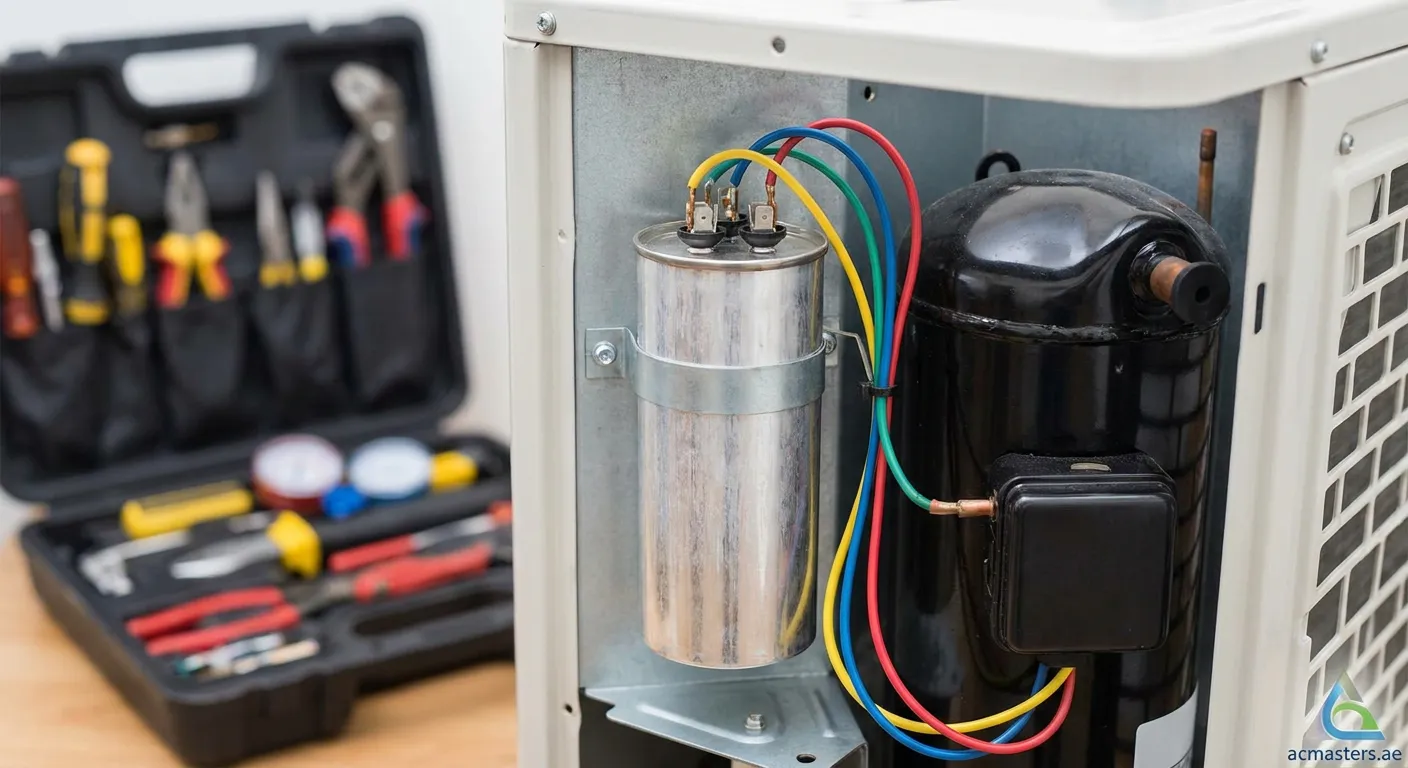
What Are AC Capacitors?
Capacitors are electrical components that store and release energy rapidly. In air conditioning systems, they provide the necessary power boost to start motors and keep them running efficiently.
The role of capacitors in air conditioning is crucial for two main functions: starting the compressor and fan motors, and maintaining their operation.
Types of Capacitors
There are two primary types found in AC units:
- Start capacitors: Provide extra torque to start the motor
- Run capacitors: Maintain continuous motor operation
Some systems use a dual-run capacitor that combines both functions in one unit.
How Capacitors Work in Your AC System
When your thermostat signals the need for cooling, capacitors in air conditioning systems spring into action. They store electrical energy and release it quickly to create the magnetic field needed for motor startup.
A failing capacitor is one of the most common causes of AC breakdowns during hot summer months.
The Startup Process
- The thermostat sends a signal to the AC unit
- The start capacitor provides an energy boost
- The compressor and fan motors begin running
- The run capacitor maintains steady operation
- Cool air circulates through your home
Signs of a Failing Capacitor
Recognizing capacitor problems early can prevent complete system failure:
- AC won't start: The unit hums but doesn't turn on
- Intermittent cooling: System cycles on and off frequently
- Higher energy bills: Motors work harder with weak capacitors
- Clicking sounds: Indicates capacitor attempting to start motors
- Bulging or leaking: Physical damage visible on the component
Why Capacitors Fail
Understanding the role of capacitors in air conditioning includes knowing why they fail:
- Heat exposure: High temperatures degrade components over time
- Electrical surges: Power spikes can damage internal materials
- Age: Most capacitors last 10-15 years under normal conditions
- Poor maintenance: Dirty coils increase system strain
Maintenance and Replacement
Regular maintenance extends capacitor life:
Preventive Measures
- Keep outdoor units clean and shaded
- Schedule annual professional inspections
- Monitor energy bills for unusual increases
- Address cooling issues promptly
Professional Replacement
Capacitor replacement requires technical knowledge. Working with high-voltage components poses serious safety risks.
Professional technicians can:
- Diagnose capacitor problems accurately
- Select correct replacement specifications
- Install safely without system damage
- Verify proper operation after replacement