




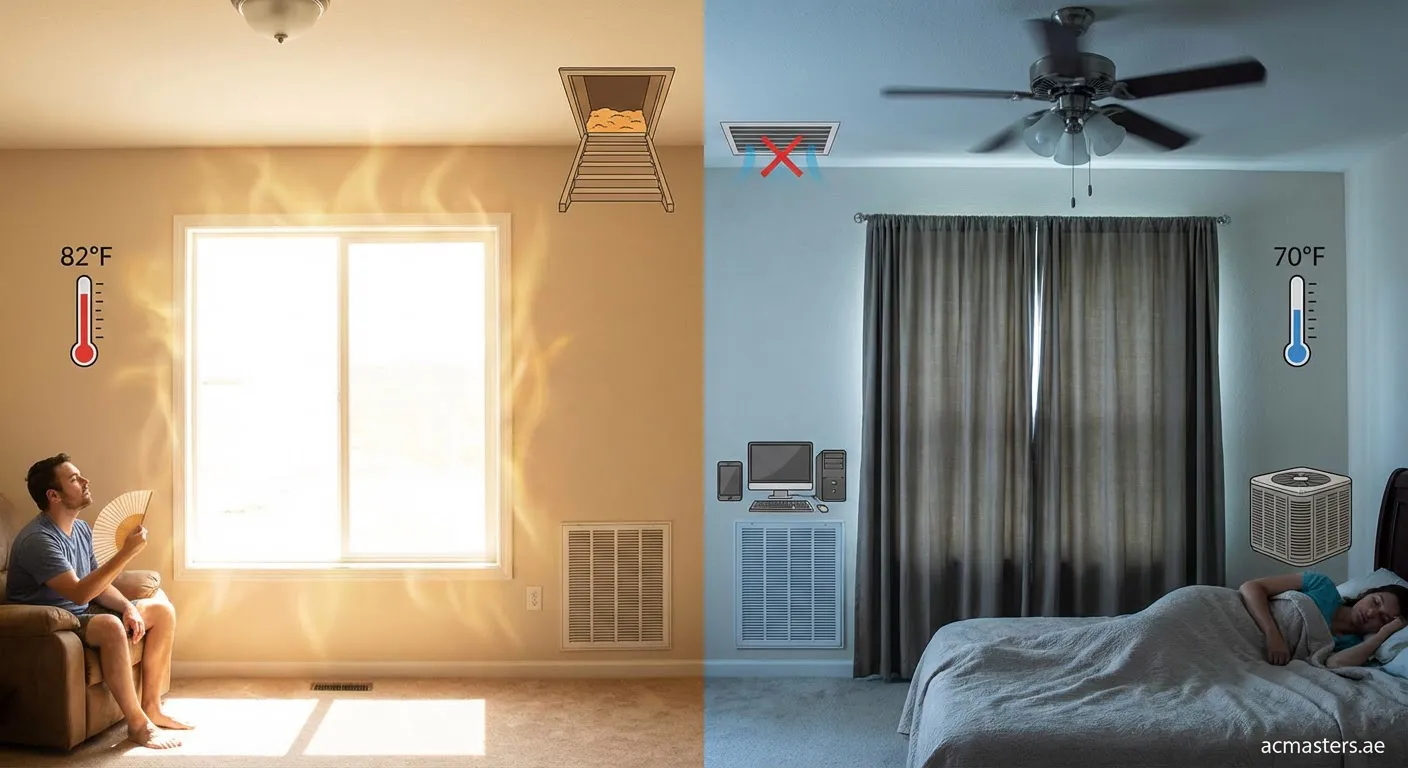
Uneven temperatures in your home can be frustrating and uncomfortable. When you find yourself asking "Why is one room hotter than the others?", understanding the root causes is the first step toward solving this common problem.
Common Causes of Temperature Imbalances
Poor Insulation and Air Leaks
One of the most frequent reasons for a room being hotter than others is inadequate insulation. Rooms with insufficient insulation in walls, ceilings, or floors struggle to maintain consistent temperatures. Air leaks around windows, doors, and electrical outlets allow conditioned air to escape while letting hot air enter.
Sunlight Exposure and Window Issues
Rooms facing west or south receive more direct sunlight throughout the day. Large windows without proper treatments can turn these spaces into heat traps. Solar heat gain through windows can raise room temperatures by several degrees compared to shaded areas of your home.
HVAC System Problems
Your air conditioning system might be the culprit when one room stays hotter:
- Undersized AC units struggle to cool larger homes adequately
- Blocked or closed vents restrict airflow to specific rooms
- Dirty air filters reduce overall system efficiency
- Leaky ductwork fails to deliver cool air where needed
Ductwork Design Flaws
Poorly designed duct systems often fail to distribute air evenly throughout the house. Long duct runs without proper sizing can result in weaker airflow to distant rooms. Sharp bends and kinks in ductwork further restrict air delivery.
Diagnostic Steps to Identify the Problem
Before fixing the issue, determine exactly what's causing it:
- Check all vents for blockages or closed registers
- Inspect windows for gaps or damaged seals
- Measure temperature differences between rooms
- Examine insulation levels in attics and walls
- Schedule a professional HVAC inspection
Effective Solutions for Uneven Cooling
Improve Airflow Distribution
- Open all vents fully unless intentionally redirecting airflow
- Clean registers regularly to remove dust buildup
- Consider installing a zoning system for better control
- Add booster fans to improve circulation to problem areas
Enhance Window Efficiency
Install energy-efficient window treatments like cellular shades or reflective films. Double-glazed windows provide better insulation than single-pane alternatives.
Seal Air Leaks and Improve Insulation
Apply weatherstripping around doors and windows. Use caulk to seal gaps around window frames. Add insulation to attics and exterior walls where needed.
Professional HVAC Solutions
Sometimes the best solution involves professional intervention:
- Duct sealing and repair services
- System rebalancing by certified technicians
- Installation of mini-split systems for targeted cooling