




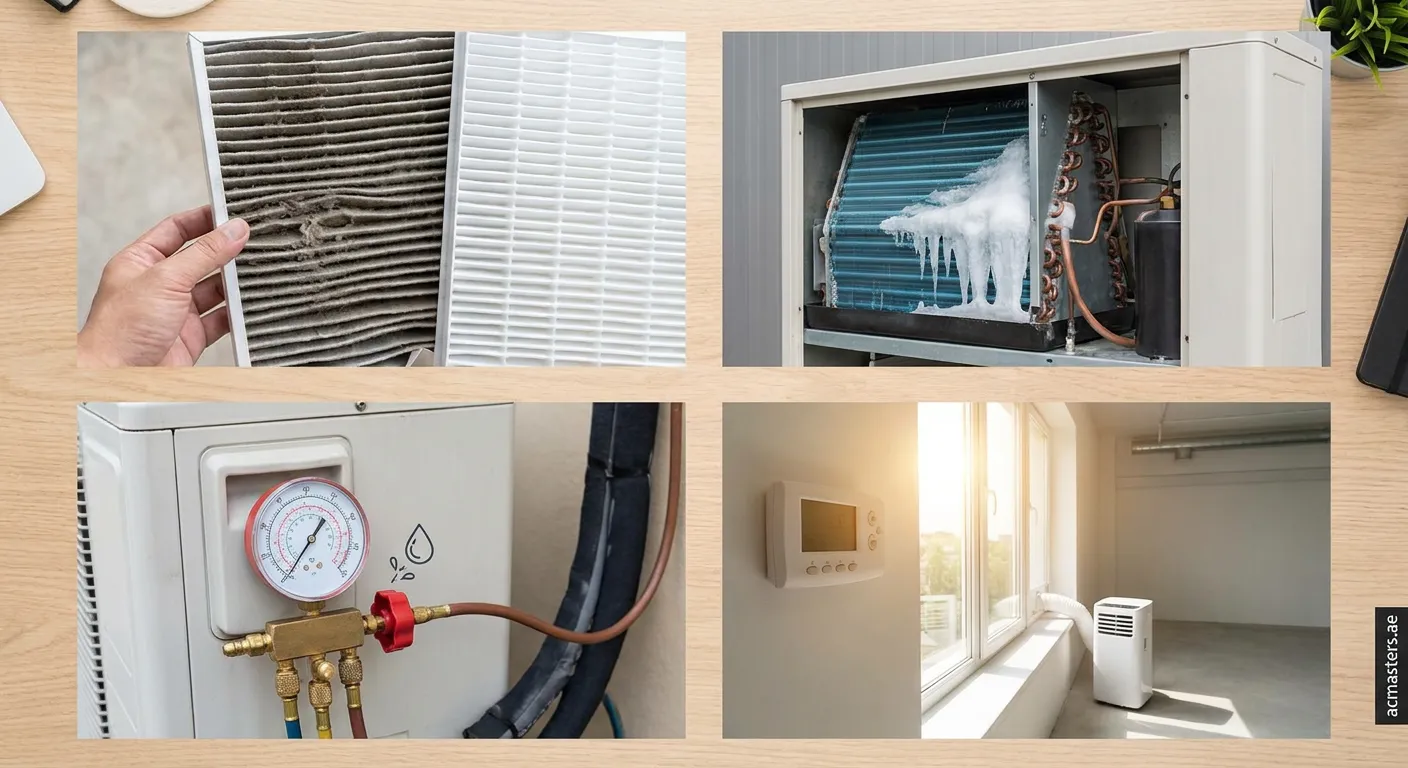
What Is AC Short Cycling?
Short cycling occurs when your air conditioner runs for only a few minutes before shutting off, only to restart again shortly after. This rapid on-off pattern prevents your system from completing a full cooling cycle, leading to wasted energy and premature wear.
Understanding the common reasons for AC short cycling can help you identify issues early and prevent costly repairs.
Top Causes of Air Conditioner Short Cycling
1. Dirty or Clogged Air Filter
A restricted air filter limits airflow to your system, causing the evaporator coil to freeze. When frozen, your AC cannot operate properly and may shut down prematurely.
Pro Tip: Check your filter monthly and replace it every 1-3 months depending on usage and household conditions.
2. Refrigerant Leaks
Low refrigerant levels due to leaks cause pressure imbalances in your system. Your AC works harder to compensate, often triggering safety mechanisms that cause short cycles.
3. Oversized AC Unit
An oversized air conditioner cools spaces too quickly without properly removing humidity. The thermostat reaches temperature rapidly, shutting off before a complete cycle finishes.
4. Faulty Thermostat Placement or Calibration
If your thermostat is positioned near heat sources or direct sunlight, it reads inaccurate temperatures. Poor calibration also causes erratic operation patterns.
5. Dirty Condenser Coils
Outdoor condenser coils accumulate dirt over time, preventing proper heat transfer between indoor units while restricting airflow through outdoor systems—both lead directly into overheating protection mode resulting in unexpected shutdowns throughout hot summer months!
| Problem | Symptom |
|---|---|
| Low refrigerant | Hissing sounds near copper lines |
| Frozen evaporator | Ice buildup on indoor unit |
| Bad capacitor | Clicking noise at startup |
| natural symptoms indicating potential root causes behind those problematic common reasons for ac short-cycling homeowners frequently face! | |
| n--- | |
| n## Why Addressing Short Cycling MattersnnIgnoring these warnings leads toward:n-n* Higher utility bills from inefficient operation patterns consuming excess electricity during peak demand periods | |
| n* Compressor failure, which ranks among most expensive residential HVAC component replacements available today! | |
| n* Reduced equipment lifespan, meaning earlier-than-necessary total system replacement needs arising sooner rather than later... nn## When Should You Call An Expert? | |
| nPersistent issues require professional evaluation using specialized diagnostic tools capable measuring: | |
| n-n+ Superheat/subcooling values showing whether correct charging procedures were followed originally | |
| n+ Electrical measurements verifying whether start-assist components remain functional under load conditions | |
| n+ Static pressure readings confirming ductwork design supports proper airflow volumes across both supply AND return sides equally! |