




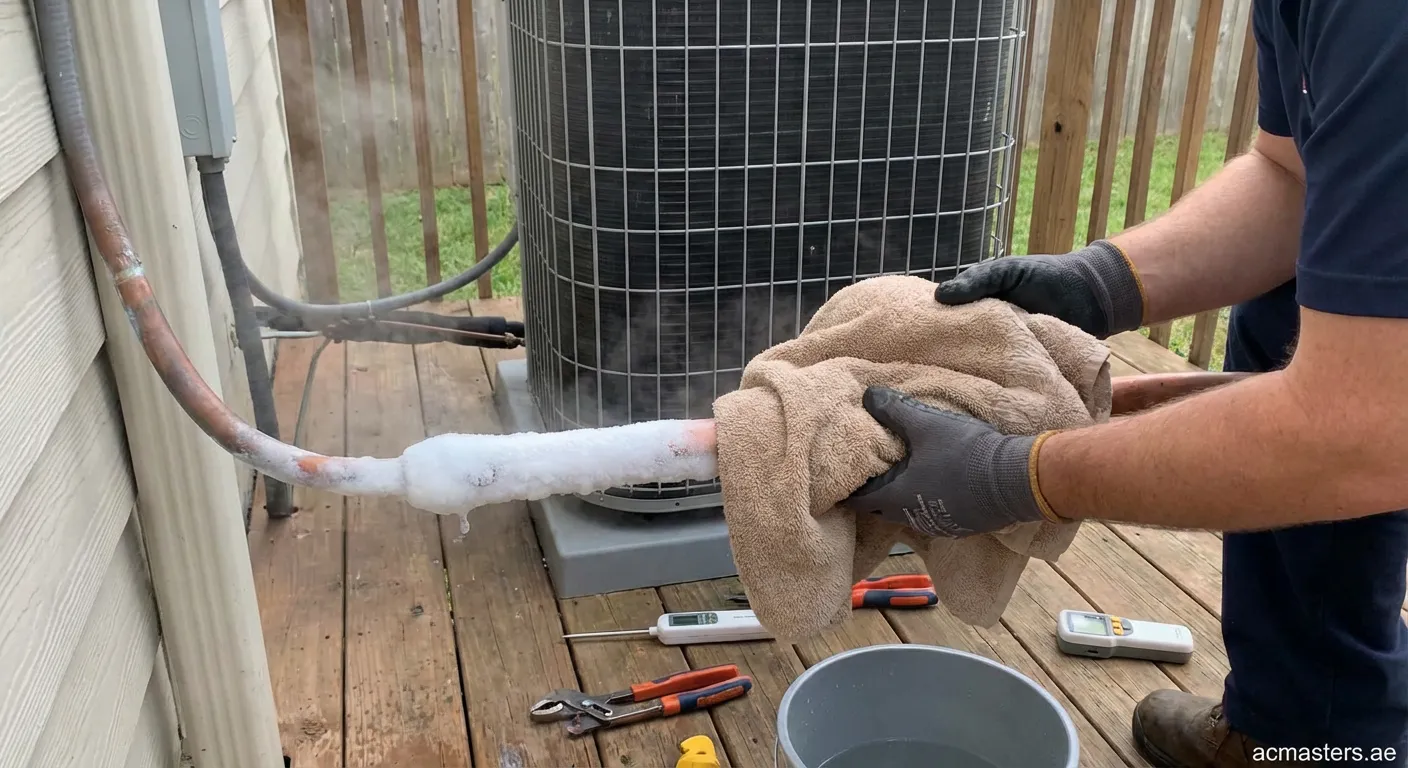
Understanding Why Your AC Suction Line Freezes
When you discover ice forming on your air conditioner's copper tubing, learning how to fix a frozen AC suction line becomes essential for preventing costly compressor damage. This common problem affects many homeowners during peak cooling seasons.
Primary Causes of Suction Line Freezing
Low Refrigerant Levels represent the most frequent culprit behind frozen suction lines. When refrigerant charge drops below optimal levels due to leaks, evaporator coil temperatures plunge below freezing, causing moisture to accumulate as ice along the suction line.
Restricted Airflow across indoor evaporator coils creates similar freezing conditions. Clogged air filters, blocked return vents, or dirty coil surfaces prevent adequate heat absorption, leading to temperature drops that freeze condensation.
Step-by-Step Troubleshooting Guide
Turn off your AC immediately - Running a frozen system risks severe compressor damage that could require complete unit replacement.
Check and replace air filters - Dirty filters restrict airflow significantly. Replace disposable filters or clean washable types thoroughly.
Inspect return vents - Ensure furniture, curtains, or rugs aren't blocking airflow to your return registers.
Examine the evaporator coil - Access your indoor unit and check for visible dirt accumulation on coil surfaces requiring professional cleaning.
Verify thermostat settings - Setting temperatures too low strains the system and promotes freezing conditions.
When to Call Professional Help
Determining how to fix a frozen AC suction line sometimes requires expert intervention. Low refrigerant indicates system leaks needing specialized equipment to locate and repair. Professional technicians recover remaining refrigerant, pressure-test for leaks, then properly recharge systems according to manufacturer specifications.
Additionally, damaged blower motors, failed capacitor components, or severely clogged coils demand professional attention beyond typical homeowner capabilities.
Preventive Maintenance Tips
- Schedule annual professional maintenance inspections before cooling season begins
- Replace air filters every 30-90 days depending on household conditions
- Keep outdoor condenser units clear of debris and vegetation within two feet
- Ensure all supply and return registers remain unobstructed throughout living spaces
Understanding these troubleshooting steps helps you address minor issues promptly while recognizing situations requiring qualified HVAC technicians for safe, effective repairs.