




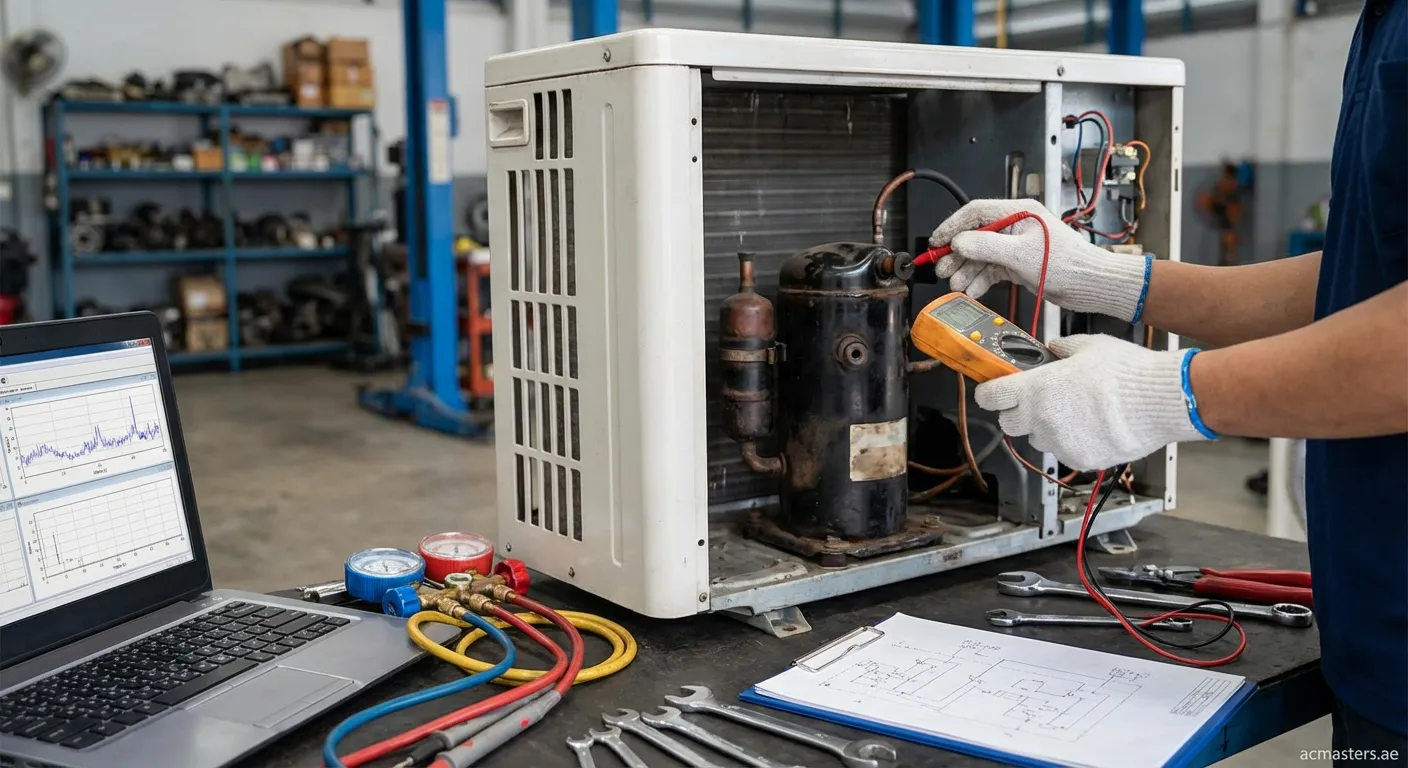
Diagnosing air conditioning issues can be daunting, but knowing how to troubleshoot a bad AC rotary compressor is essential for any homeowner or technician wanting to save on costly repairs. The rotary compressor is the heart of your AC unit, responsible for circulating refrigerant. When it fails, your home stays hot. Here is a comprehensive guide to identifying and testing faulty compressors.
Common Signs of a Bad Rotary Compressor
Before you grab your multimeter, look for these physical and audible indicators:
- Loud Buzzing or Humming: If the outdoor unit hums but the fan is spinning (or not), the compressor might be seized or trying to start against high pressure.
- Warm Air Blowing: If the fan runs but the air isn't cold, the compressor isn't pumping refrigerant.
- Tripped Circuit Breaker: A failing compressor often draws excessive amperage, tripping the breaker immediately upon startup.
- Vibration: Excessive shuddering during startup can indicate internal mechanical failure.
Step-by-Step Troubleshooting Guide
To properly learn how to troubleshoot a bad AC rotary compressor, you need a digital multimeter and basic safety gear.
1. Safety First
Always disconnect the power to the AC unit at the disconnect box or main breaker panel. Capacitors can hold a lethal charge, so discharge the capacitor carefully using an insulated screwdriver across its terminals before touching any wires.
2. Inspect the Capacitor
Often, a "bad compressor" is actually just a bad start/run capacitor.
- Visually inspect the capacitor for bulging or leaking oil.
- Use a multimeter with capacitance capability to test microfarads. If the reading is outside the rated range (e.g., +/- 5%), replace the capacitor and try starting the AC again.
3. Check the Electrical Terminals
Remove the terminal cover on the compressor. You will see three pins: Common (C), Start (S), and Run (R).
- Look for burnt wires or melted terminal posts. Damaged terminals often require a compressor replacement or a professional terminal repair kit.
4. Measure Winding Resistance
This is the core of how to troubleshoot a bad AC rotary compressor. Set your multimeter to Ohms ($\Omega$).
- Test C to S: Should give a resistance reading (e.g., 3-5 Ohms).
- Test C to R: Should give a lower resistance reading (e.g., 1-3 Ohms).
- Test S to R: The sum should roughly equal the total of the previous two readings (C-S + C-R).
- Interpretation: If you get a reading of "OL" (Open Loop) or infinity on any pair, the windings are broken (open), and the compressor must be replaced.
5. Check for Short to Ground
Set your multimeter to the continuity setting.
- Place one probe on the clean copper line or compressor casing and the other on each terminal pin (C, S, R) one by one.
- Result: You should not get a beep or continuity reading. If you do, the internal windings have shorted to the case (grounded compressor). This is a severe failure requiring immediate replacement.
6. Mechanical Stuck Check
If the electrical windings test fine but the compressor hums and won't start (even with a good capacitor), it might be mechanically seized. Technicians sometimes use a "hard start kit" to jolt it free, but this is often a temporary fix.
Summary
Understanding how to troubleshoot a bad AC rotary compressor allows you to distinguish between a simple capacitor fix and a major system failure. Always prioritize safety when working with high-voltage HVAC equipment.