




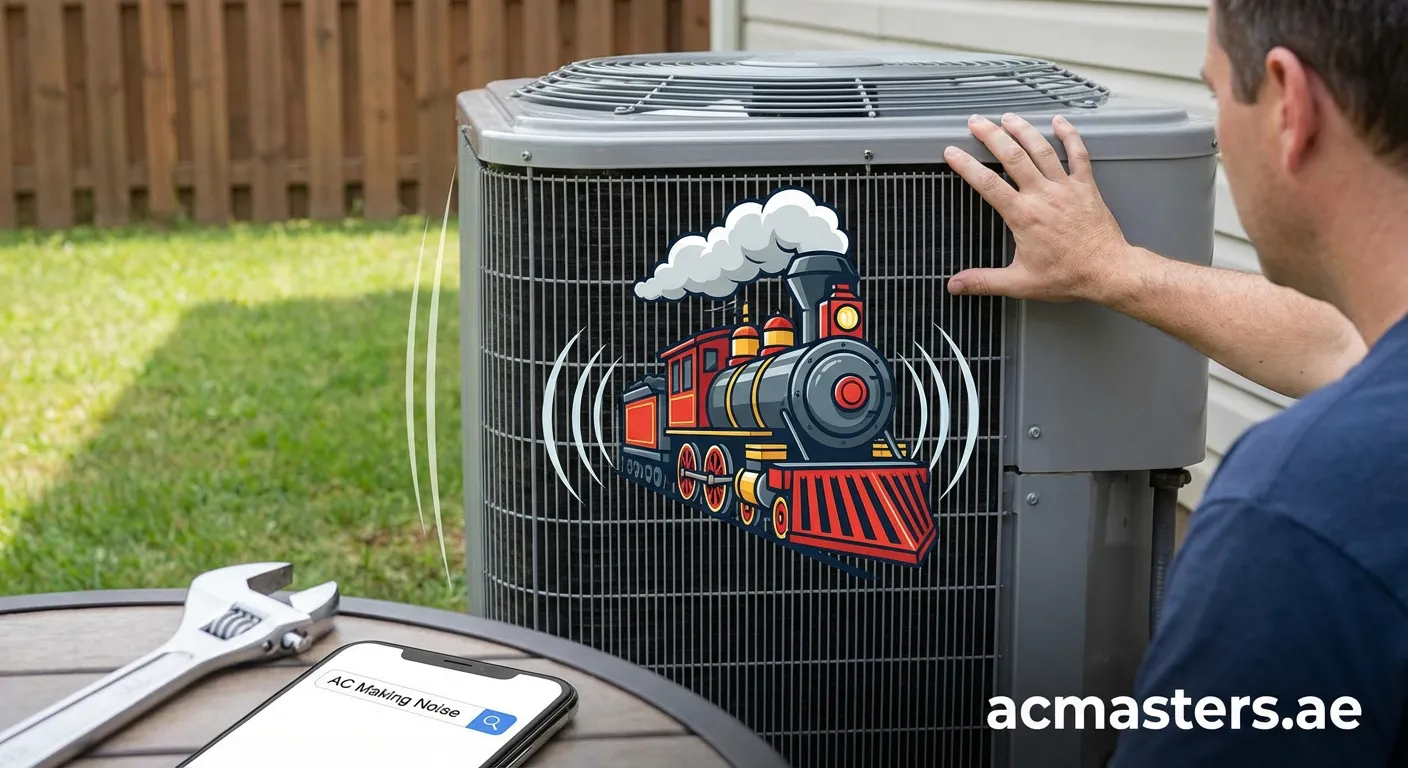
If you are startled by a loud, rhythmic chugging or roaring sound coming from your air conditioning unit, you are likely asking, "Why is my AC making a train noise?" Unlike a gentle hum, a sound resembling a locomotive indicates a significant mechanical problem that requires immediate investigation. Ignoring this noise can turn a minor repair into a complete system replacement.
Decoding the "Train" Sound
When homeowners report that their AC sounds like a train, they are usually describing one of two distinct noises:
- A loud roaring or rumbling: This is continuous and deep, similar to a train passing in the distance.
- A rhythmic chugging or clanking: This sounds like the wheels of a train on tracks, often speeding up or slowing down with the motor.
Identifying the specific type of noise helps in diagnosing the root cause.
Common Causes of the Train Noise
There are three primary culprits when an AC unit sounds like a train.
1. Fan Motor and Blade Issues
The most common reason you might ask, "Why is my AC making a train noise?", is a problem with the outdoor fan.
- Loose Fan Blades: Over time, the mounting hardware can loosen. If the fan becomes unbalanced, it can wobble and strike the protective cage or the sides of the unit, creating a rhythmic clanking "chug-chug" sound.
- Worn Bearings: Inside the fan motor, bearings facilitate smooth rotation. When these bearings wear out or lose lubrication, they grind, creating a loud, continuous roaring noise.
2. Compressor Malfunction
The compressor is the heart of your HVAC system. When it begins to fail, it often becomes the source of the noise.
- Internal Component Damage: If internal parts like pistons or connecting rods are worn, the compressor may make a loud banging or clattering noise that mimics a train engine.
- High Pressure: If the system is overcharged with refrigerant or the coil is blocked, the compressor has to work harder, leading to excessive vibration and a deep rumbling sound.
3. Debris and Vibration
Sometimes, the answer to "Why is my AC making a train noise?" is external.
- Debris: Twigs or sticks falling into the outdoor unit can get hit by the fan blades.
- Loose Mounting: If the isolation feet (pads under the unit) have deteriorated, the vibration of the compressor transfers directly to the concrete pad or your home's foundation, creating a loud rumble.
What Should You Do?
If your AC acts like a locomotive, follow these steps:
- Turn it off: Do not let the system run. Continued operation can cause a loose fan blade to puncture the condenser coil or a failing compressor to burn out completely.
- Check for visible debris: Look inside the outdoor unit (condenser) for sticks or obstructions.
- Call a professional: Diagnosing compressor issues or replacing fan motors involves high-voltage electricity and refrigerant handling, which requires a certified technician.
Addressing these noises early is the key to saving your cooling system and avoiding expensive replacements.