




Why Cleaning Your Condensate Line Matters
Your air conditioner removes humidity from the air, and this moisture collects in the condensate line. Over time, algae, mold, and debris build up inside, causing clogs. A blocked line can lead to:
- Water damage to ceilings, walls, and floors
- Mold growth in your home
- Reduced AC efficiency and higher energy bills
- Complete system shutdown in newer units with safety sensors
Signs Your Condensate Line Is Clogged
Watch for these warning signs:
- Water pooling around the indoor unit
- Musty odors coming from vents
- AC shutting off unexpectedly
- Visible water stains near the unit
Tools and Materials Needed
Before learning how to clean the condensate line of your AC, gather these supplies:
- Wet/dry vacuum
- Distilled white vinegar
- Clean rags or towels
- Funnel or turkey baster
- Pipe brush or stiff wire
- Bucket
Step-by-Step Cleaning Process
Step 1: Turn Off the Power
Safety first! Turn off your AC at the thermostat and flip the breaker switch. This prevents electrical hazards while you work.
Step 2: Locate the Drain Line
Find the condensate drain line near your indoor air handler. It's typically a PVC pipe exiting the unit and leading outside or to a floor drain.
Step 3: Access the Cleanout Port
Many systems have a T-shaped vent with a cap. Remove this cap to access the drain line. If there's no cleanout, you'll need to cut a small access point.
Step 4: Remove Debris
Insert a pipe brush or stiff wire into the line to break up clogs. Move it back and forth to dislodge algae and buildup.
Step 5: Use a Wet Vacuum
Place the vacuum hose over the drain line outlet outside your home. Run it for 2-3 minutes to suction out debris and standing water.
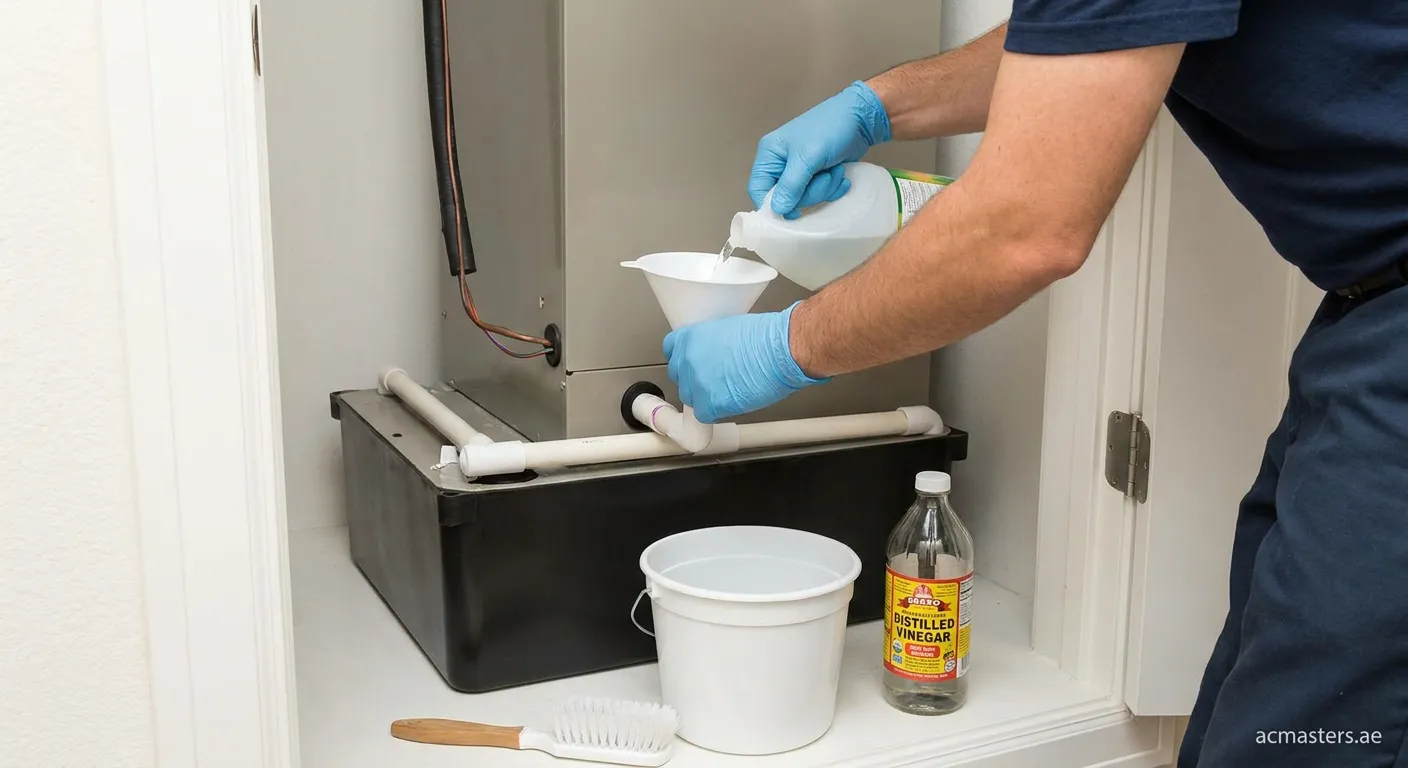
Step 6: Flush with Vinegar
Pour 1 cup of distilled white vinegar through the cleanout port. Let it sit for 30 minutes to kill algae and dissolve buildup. Vinegar is safe for pipes and won't damage your system.
Pro Tip: Use vinegar monthly to prevent future clogs. Avoid bleach, as it can damage metal components and pipes.
Step 7: Rinse with Water
After the vinegar sits, flush the line with warm water. Repeat until the water flows freely through the drain.
Step 8: Reassemble and Test
Replace the cleanout cap, turn the power back on, and run your AC for 15 minutes. Check that water drains properly outside.
Preventing Future Clogs
Regular maintenance is key. Follow these tips:
- Clean monthly during peak usage season
- Install a condensate tablet to inhibit algae growth
- Consider adding a float switch to shut off the AC if water backs up
- Keep the area around the drain line clean
When to Call a Professional
While DIY cleaning handles most clogs, some situations require expert help:
- Multiple clogs despite regular cleaning
- Water damage already present
- Unusual sounds or smells from the system
- No visible improvement after cleaning