




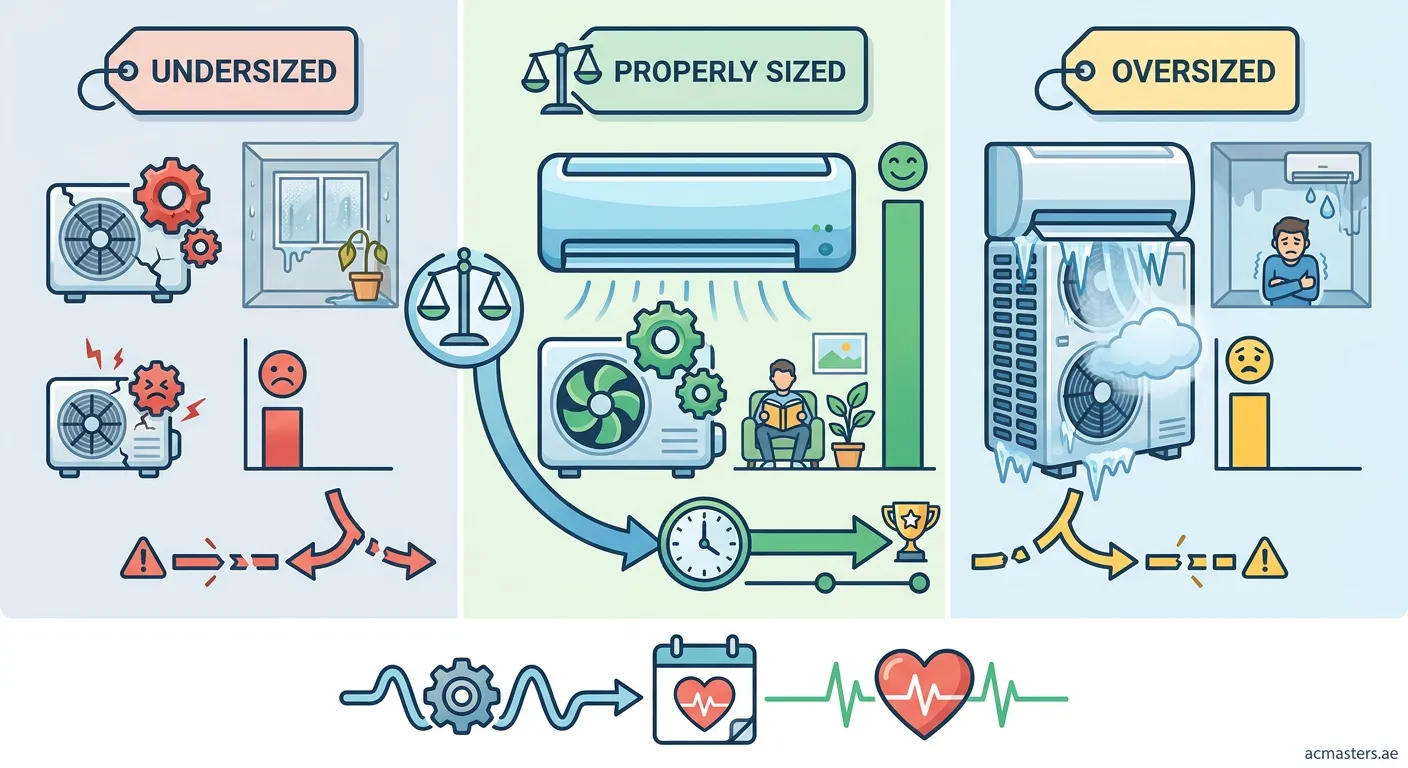
Why Proper Sizing Matters
The impact of proper sizing on AC longevity cannot be overstated. When an air conditioning system is correctly sized for your space, it operates within its designed parameters, ensuring optimal performance and extended lifespan. Conversely, improperly sized units face numerous challenges that significantly reduce their operational life.
Oversized Units: Hidden Problems
Oversized air conditioners cool spaces too quickly, leading to short cycling. This phenomenon occurs when the system:
- Starts and stops frequently
- Fails to complete full cooling cycles
- Experiences excessive wear on compressor components
- Doesn't adequately remove humidity
Short cycling places tremendous stress on mechanical parts, particularly the compressor—the most expensive component to replace. Studies show that oversized systems can reduce AC lifespan by up to 30% compared to properly sized units.
Undersized Units: Continuous Struggle
Undersized air conditioners face opposite but equally damaging problems:
- Continuous operation trying to reach set temperatures
- Higher energy consumption due to constant running
- Premature component failure from excessive wear
- Inadequate cooling during peak demand periods
An undersized unit may run 20-30% longer than necessary, dramatically shortening its expected lifespan while increasing utility bills.
The Science Behind Correct Sizing
HVAC professionals use Manual J load calculations to determine appropriate system capacity. This comprehensive assessment considers:
- Square footage and ceiling height
- Insulation quality and type
- Window size, type, and orientation
- Local climate conditions
- Number of occupants
- Heat-generating appliances
- Air infiltration rates
"A properly sized air conditioner should run continuously for 15-20 minutes per cycle, removing humidity effectively while maintaining consistent temperatures throughout your home." — HVAC Best Practices Institute