




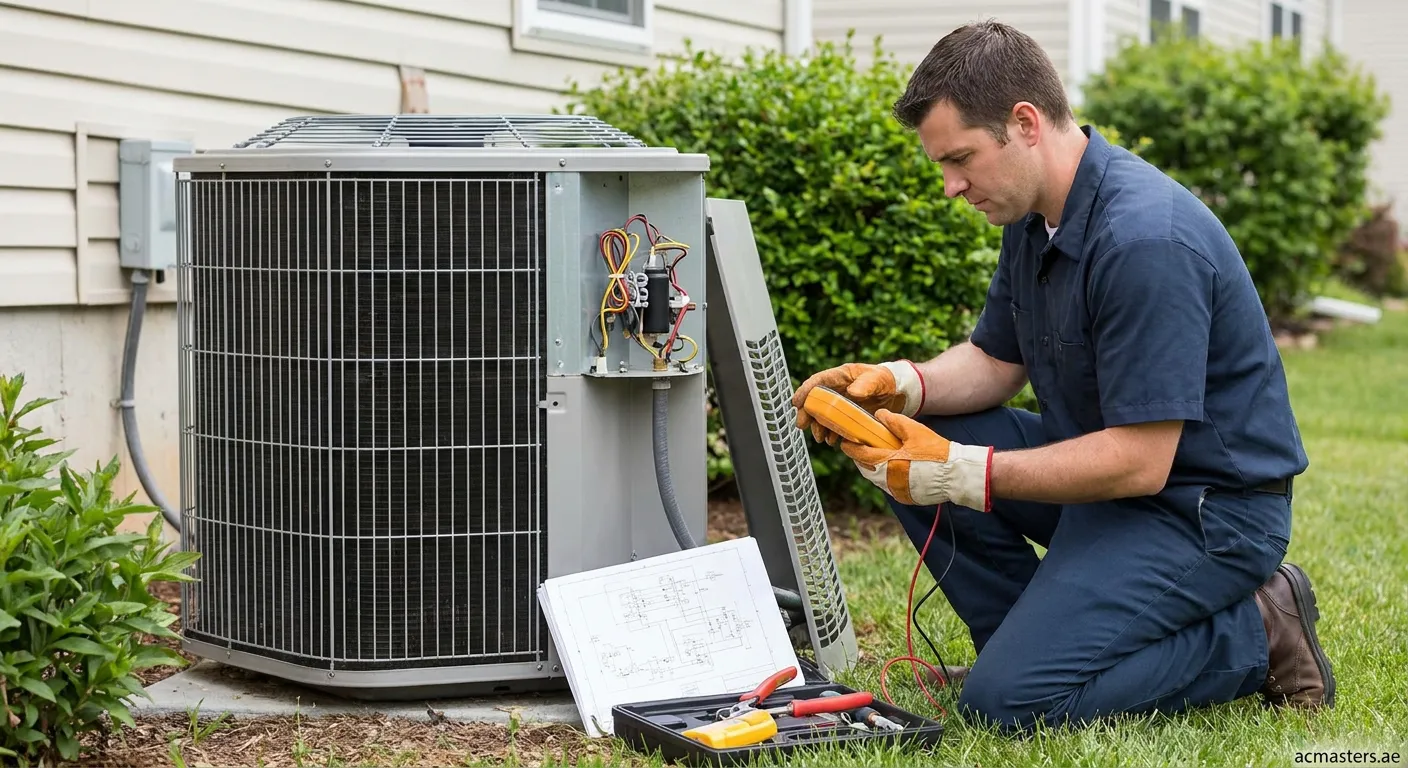
When your air conditioner blows room-temperature air, the culprit is often outside. Understanding how to troubleshoot AC outdoor unit not running can save you time, unnecessary service fees, and restore comfort to your home quickly.
1. Check Thermostat Settings and Power
Start with the simplest potential cause. Verify that your thermostat is set to "Cool" and the target temperature is set at least 3–5 degrees below the current room temperature.
- Ensure thermostat batteries are fresh and the display is active.
- Set the fan mode to "Auto" instead of "On" to prevent continuous warm blowing.
- If your thermostat relies on a schedule, ensure an override didn't turn off cooling.
2. Inspect the Circuit Breaker and Disconnect Box
An AC condenser draws significant electrical current during startup. High electrical surges can trip safety breakers.
- Locate your main electrical panel and look for tripped breakers labeled AC or Condenser.
- Check the outdoor disconnect switch located on the wall near the condenser unit.
- Verify the safety pull-out switch or breaker inside the disconnect box is fully engaged. Learning how to troubleshoot AC outdoor unit not running safely requires turning off all power before inspecting any electrical panels.
3. Examine the Condenser Contactor and Capacitor
The dual run capacitor and contactor are the most frequent components to fail in an outdoor condenser.
- Capacitor Failure: A bulging top or oily residue indicates a blown capacitor. A bad capacitor cannot provide the electrical jolt required by the compressor or fan motor.
- Stuck Contactor: The contactor acts as a magnetic relay switch. Ants, dirt, or burnt contact points can prevent voltage from flowing to the compressor.
Safety Warning: AC capacitors store high voltage even when power is off. If you suspect capacitor failure, consult an HVAC technician.
4. Check the Safety Float Switch and Drain Line
Modern air conditioners include safety float switches on the indoor drain pan. If the condensate drain line is clogged with algae:
- Water backs up in the drain pan.
- The float switch triggers and cuts the 24V control signal to the condenser.
- The indoor blower runs, but the outside compressor stays completely off. Clear the drain line using a wet/dry vacuum or vinegar solution to reset the switch.
5. Clean Coils and Inspect Fan Motor
A severely dirty condenser coil or a seized outdoor fan motor can trip the internal thermal overload protector on the compressor. Inspect the unit for debris, foliage, and dirt accumulation. Gently hose down the aluminum fins and check if the fan spins freely by hand with power disconnected. Following this structured guide on how to troubleshoot AC outdoor unit not running helps isolate whether you face a simple switch issue or a mechanical defect.